Jean Dudderidge (left) and Jill Epton (right) with a cheque to Diabetes UK from funds they raised at the Exeter Diabetes UK group to support diabetes research.
In this episode Andrew and Maggie talk to Jean Dudderidge and Jill Epton who have both lived with Type 1 diabetes for over 50 years. Jean’s jobs included running and cooking in a restaurant and Jill worked as a dentist. Both are keen walkers and have been great supporters of the Exeter Diabetes UK branch.
They discuss the massive changes in how they have been able measure their blood sugar. Initially there was no way of knowing how high the blood glucose was. This was replaced with urine testing first using a chemical kit that changed colour depending on the amount of sugar in the urine and then this was replaced with paper strips. The problem with urine testing was that it told you if the glucose had been high and spilled into the urine but did not tell you what your blood glucose was now. The change to blood glucose testing using strips was a great step forwards but there were problems with strip supply, results taking 2 minutes and the size of the meters. Meters continued to improve and at the turn of the century they were accurate, rapid and small; however they still needed a blood sample typically from the finger tip which was inconvenient and painful.
Everything changed with the development of continuous glucose monitoring such as the Libre and Dexcom. Now a monitor which lasted 2 weeks would be positioned on the arm and would be able to measure the glucose under the skin which is tightly related to the blood glucose. This allowed patients to know what their glucose was at any time night or day with results either going to a smart phone or a handset that scanned the patch. It also meant there could be alarms to warn when there glucose was going low. Initially these new meters were limited to a few selected patients but due to the campaigning and leadership of Professor Partha Kar they became available to every patient with Type 1 diabetes. We hear from Jean and Jill how this transformed their lives.
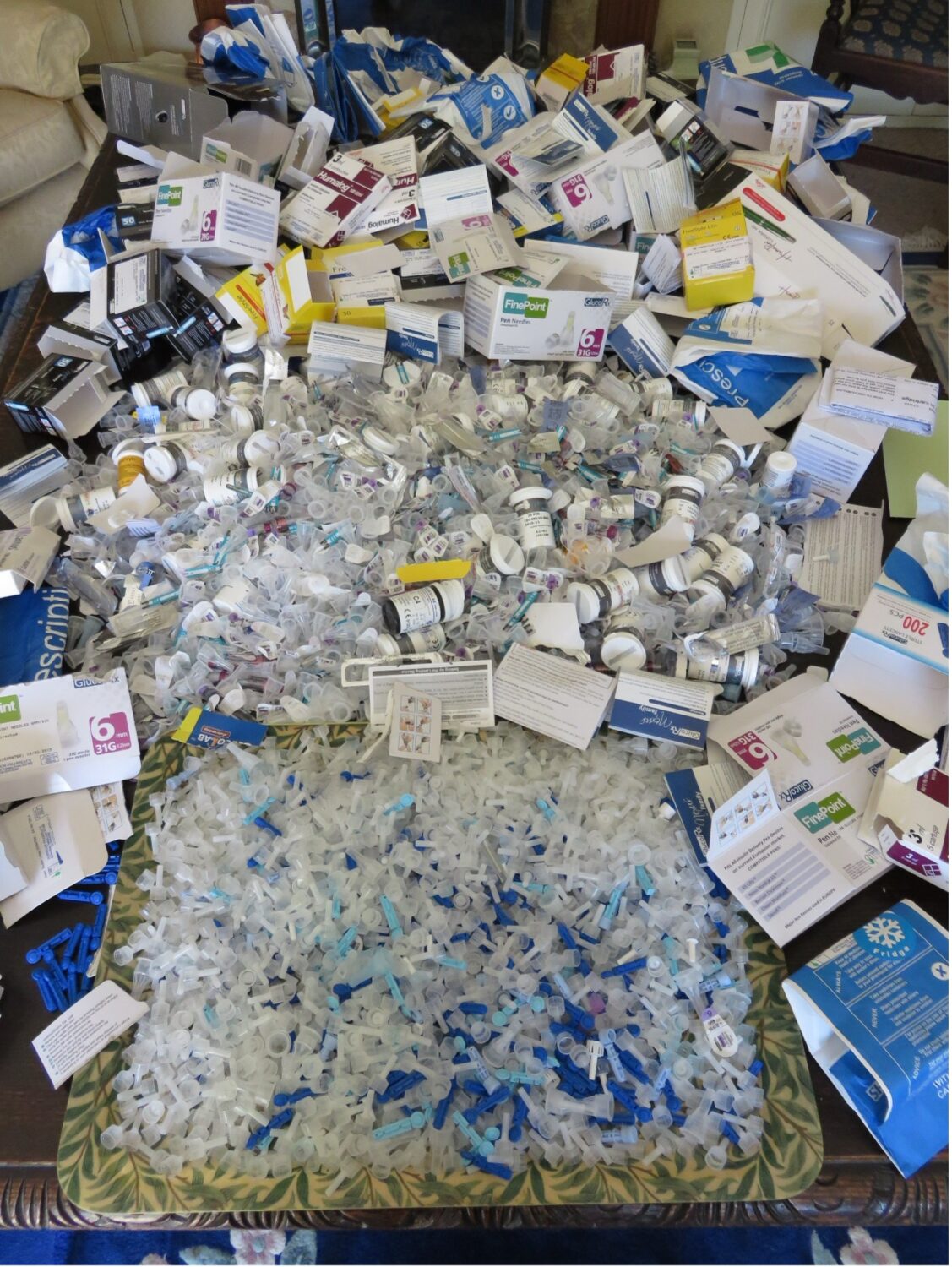
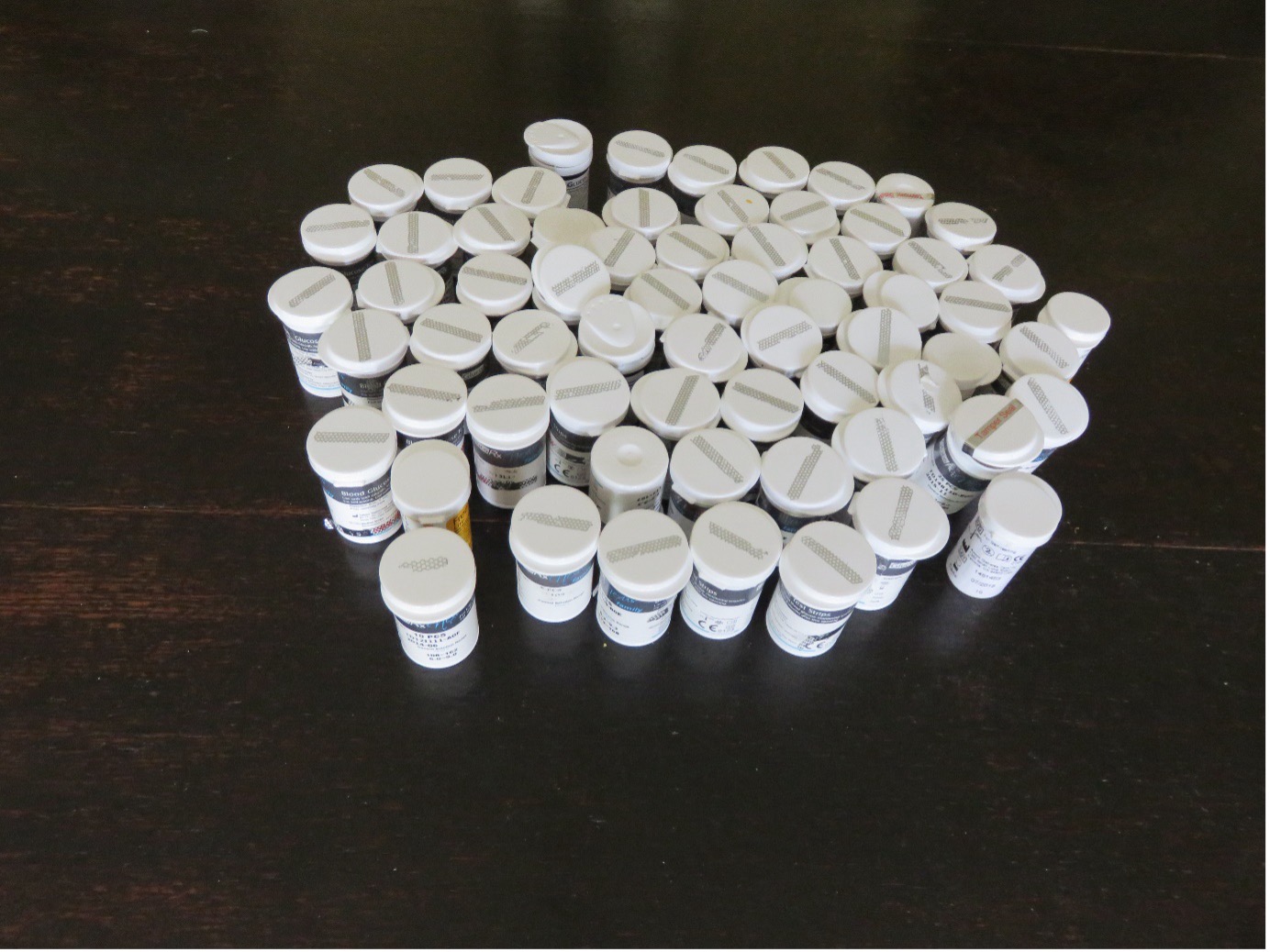
Jean Dudderidge kept all the waste products from a year’s treatment for Type 1 diabetes in 2014/2015 This includes: needles, their papers & plastic covers, finger pricking lancets, blood glucose test strips and containers, insulin cartridges and plastic covers and all the associated packaging: boxes, bags and leaflets.